


Pick your connector by the physical plug shape, not just the brand and wire count. Two connectors can both be "Honda 2-wire" or both be "Ducati 2-wire" and still not plug into each other, because manufacturers use several different housing shapes across models and years. The fastest way to get the right part is to match the photo to the plug already on your bike, then decide whether you need a single connector or a Y-splitter.
A single connector allows you to connect aftermarket blinker lamps to your motorcycle harness without having to cut any wires on the harness itself. A Y-splitter takes one turn signal circuit and feeds two different blinker lamps from it, so you can run a second set of blinker lamps on the same circuit all while keeping it plug-and-play with factory connectors. Both come pre-wired and sheathed, and both are sold as pairs so you can do the left and right sides in one go.
Keep your factory blinker lamps and add an integrated tail light
The most common reason riders reach for a Y-splitter is to keep their stock blinker lamps while adding an integrated LED tail light, and you can do it without cutting a single wire. A Blaster-X integrated tail light has its own built-in rear blinker lamps that plug into the OEM connectors. By default, our Blaster-X Tail Lights are equipped with OEM turn signal connectors that will occupy the turn signal connectors on the motorcycle harness. Most of the time, the OEM rear blinker lamps are being removed so this is not an issue. However, if you want to run both the integrated tail light and OEM or aftermarket blinker lamps together, a Y-splitter is what makes that possible. It plugs into your motorcycle's existing turn signal harness and gives you two lamp connectors where the bike only had one, so the integrated blinker lamp and your original OEM blinker lamp both run off the same factory circuit. Keeping the OEM connectors instead of cutting the harness also protects the reliability, serviceability, and resale value of your motorcycle.

A Blaster-X integrated tail light, like the 2008-2016 Yamaha YZF-R6 Blaster-X Integrated LED Tail Light, is a complete plug-and-play unit with a high quality clear lens. It installs with OEM connectors for both the tail light and the turn signals, and it carries 42 ultra bright yellow LEDs for the rear blinker lamps built right in.
If you do decide to remove your OEM blinker lamps, you may need additional accessories to correct blinker behavior, sold separately. The recommended accessories section on the tail light product pages will recommend the correct flasher relay or load equalizers. The Y-splitter is the accessory that solves the other half of that equation. Instead of removing your stock blinker lamps, you split the rear circuit so the integrated blinker lamps and the OEM blinker lamps both run together. Plugging in a splitter keeps everything reversible and keeps your factory wiring intact.
Connector or Y-splitter: which one do I need?
A connector is a one-to-one part. It gives you the correct factory plug with wire already attached, so you can splice in a new blinker lamp, extend a lead, or repair a harness without cutting the original plug off your bike. If you are swapping one blinker lamp for one blinker lamp, a connector is all you need.
A Y-splitter is a one-to-two part. It plugs into the factory turn signal connector and splits that single circuit into two outputs, so two blinker lamps blink together on the same side. The product pages describe the use case as increasing turn signal visibility with two sets of blinker lamps, such as integrated blinker lamps plus auxiliary or OEM blinker lamps. If you want to keep your stock blinker lamps and add a second pair, the splitter is the part that does it without re-wiring the harness.
There is a physical tell, too. The single connectors ship with about 8 inches of 22AWG wire already installed, while the Y-splitters use about 6 inches of 22AWG wire between the connectors. Both come with protective sheathing and both are sold as pairs, one for each side of the bike.
The splitter does not change your flasher relay. Adding a second blinker lamp per side increases the total load on that circuit, which can affect blink behavior, but you still run one flasher relay per motorcycle. If adding blinker lamps changes your blink speed, that is a relay or load question covered in our flasher relay guide and the FAQ, not a connector problem.
2-wire vs 3-wire: what the extra wire is for
Connectors and splitters come in 2-wire and 3-wire versions, and they are not interchangeable. The wire count has to match the plug on your bike. As a general pattern across the catalog, rear blinker lamps tend to use the 2-wire connector and front blinker lamps tend to use the 3-wire connector. On many bikes the front blinker lamp also doubles as a running or position lamp, which is why that plug carries an extra wire. Confirm the count by looking at your own plug rather than assuming it from the model.
You can see the split clearly in the Honda line. The Honda 2-wire connector is described as typically used for rear turn signal connectors, while the Honda 3-wire connector is described as typically used for front turn signal connectors. Yamaha follows the same idea, with a 2-wire part for some rear blinker lamps and a 3-wire part described as used for front and rear blinker lamps on some Yamaha models. Count the wires on your factory plug first, then match the part to that count.
Why "same brand, same wire count" still is not enough
This is the part that trips people up. Within a single brand and a single wire count, there can be several physically different plug shapes, and they will not mate with each other. Custom LED labels these with Type numbers, and the differences are real, not cosmetic.
The Ducati and KTM 2-wire line is the clearest example. There are three types, and the product descriptions spell out which ones go together. The Type 1 connector mates with the Type 3 connector but does not mate with the Type 2 connector. The Type 2 connector is the odd one out and does not mate with Type 1. So even though all three are "2-wire," picking by brand and wire count alone can still leave you with a plug that physically will not connect. Kawasaki is the same story on the connector side, with three separate 2-wire types that are all the same wire count but different shapes.
Match the photo of the plug, not just the words "brand" and "wire count." If two plugs in the same family do not look identical, treat them as different parts.
How to identify the connector on your bike
Look at the factory turn signal plug and check three things in order. First, count the wires going into it, two or three. Second, note the brand. Third, compare the physical shape of the plug to the product photos, because that shape is what decides the Type. If your bike is a Ducati, KTM or Kawasaki, the Type comparison matters most, since those families have multiple 2-wire shapes. If you are between two types and cannot tell from the photos, the safest move is to email a clear photo of your plug before ordering. If we do not stock a part that matches your plug, that does not mean you are stuck. Send us a photo of your factory connector and we can often build a custom pigtail for it.
The lineup
Every part below comes pre-wired with protective sheathing to prevent chafing and is sold as pairs, two per order. Single connectors come with 8 inches of 22AWG wire installed. Y-splitters use 6 inches of 22AWG wire between the connectors.
Single connectors

Honda OEM Turn Signal Connectors, 2-Wire. Typically used for rear turn signal connectors on Honda motorcycles. Pairs with the 3-wire Honda part below when your front and rear plugs differ.

Honda OEM Turn Signal Connectors, 3-Wire. Typically used for front turn signal connectors on Honda motorcycles, where the front blinker lamp also runs as a position lamp.

Yamaha OEM Turn Signal Connectors, 2-Wire. Typically used for rear turn signal connectors on some Yamaha motorcycles.
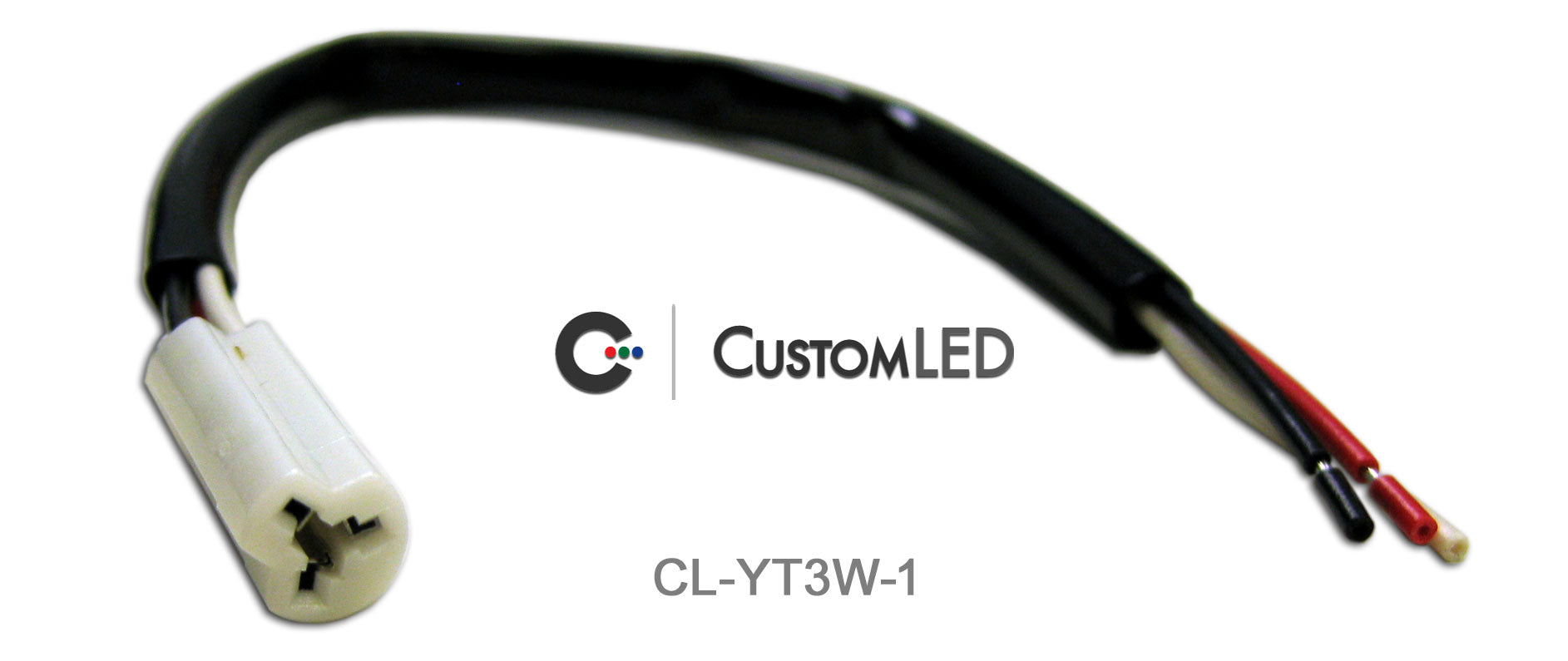
Yamaha OEM Turn Signal Connectors, 3-Wire. Typically used for front and rear turn signal connectors on some Yamaha motorcycles.

Kawasaki OEM Turn Signal Connectors, 2-Wire, Type 1. Typically used for rear turn signal connectors on Kawasaki motorcycles. Kawasaki uses three different 2-wire shapes, so compare the plug to the Type 2 and Type 3 before ordering.

Ducati and KTM OEM Turn Signal Connectors, 2-Wire, Type 1. Shared across Ducati, KTM and Yamaha. Mates with the Type 3 part but not the Type 2.

Ducati OEM Turn Signal Connectors, 2-Wire, Type 2. The odd one out. It does not mate with the Type 1 plug, so confirm your shape before choosing.

Ducati and KTM OEM Turn Signal Connectors, 2-Wire, Type 3. Ducati, KTM and Yamaha. Mates with the Type 1 part but not the Type 2.
Y-splitters

Honda OEM Turn Signal Y-Splitter Connectors, 2-Wire. Splits a rear Honda turn signal circuit so two blinker lamps blink together.

Yamaha OEM Turn Signal Y-Splitter Connectors, 2-Wire. Connects two blinker lamps to each turn signal circuit, so you can run two sets of blinker lamps together, such as integrated blinker lamps alongside auxiliary or OEM blinker lamps.

Yamaha OEM Turn Signal Y-Splitter Connectors, 3-Wire, Type 1. The 3-wire splitter for front and rear blinker lamps on some Yamaha models. This is the splitter to look at when you want to add a second set of blinker lamps to a 3-wire circuit.

Kawasaki OEM Turn Signal Y-Splitter Connectors, 2-Wire. The Type 1 Kawasaki splitter for a 2-wire circuit.

Ducati and KTM OEM Turn Signal Y-Splitter Connectors, 2-Wire, Type 1. Splitter built on the Type 1 Ducati and KTM plug. There are matching Type 2 and Type 3 splitters, so match the Type the same way you would for a single connector.
Installing them
Installation is plug-in, not splice-the-harness. That is the whole point of using the exact factory plug. For a single connector, unplug the factory blinker lamp, plug the matching connector into the bike side, and wire your new blinker lamp to the 8 inches of installed lead. For a Y-splitter, unplug the factory blinker lamp, plug the splitter's input into the bike's connector, and connect a blinker lamp to each of the two outputs, which sit on 6 inches of wire between connectors.
Here is the order of operations for a keep-both-blinker-lamps Y-splitter install:
- Identify your factory plug and order the matching splitter. Count the wires and compare the plug shape to the product photos using the steps above.
- Unplug the OEM turn signal connector on the bike and plug the Y-splitter into it. No cutting and no splicing into the factory harness.
- Connect your two blinker lamps to the two connectors the splitter now provides, one for the integrated blinker lamp and one for your OEM blinker lamp. To join your lamp wires to the splitter's leads, solder the connections and seal them with heat shrink for a clean, durable joint.
- Repeat on the other side. Both connectors and splitters are sold as pairs, so you have one for each side.
- Test both turn signals. If the blink speed looks off after adding blinker lamps, that is the load question below, not the connector.
Route the wire so the sheathing stays clear of moving and hot parts, and leave a little slack at the steering stops on front blinker lamps so the lead is not pulled tight at full lock. Because every part is sold in pairs, do the left and right sides together so both sides match.
Will splitting the circuit change my blink speed?
Adding a second blinker lamp per side does change how much current that circuit draws. That is a separate problem from anything the connector or splitter does. If your blink speed shifts after you add blinker lamps, that is a load question, not a faulty connector. The fix lives at the flasher relay or the load equalizer, not at the plug. One thing that does not change: you still have only one flasher relay per motorcycle. Adding blinker lamps does not add a relay. If you need to rebalance the circuit after your blinker modifications, you should look to replacing your flasher relay as the first option. A load equalizer for blink speed issues is always the last resort.
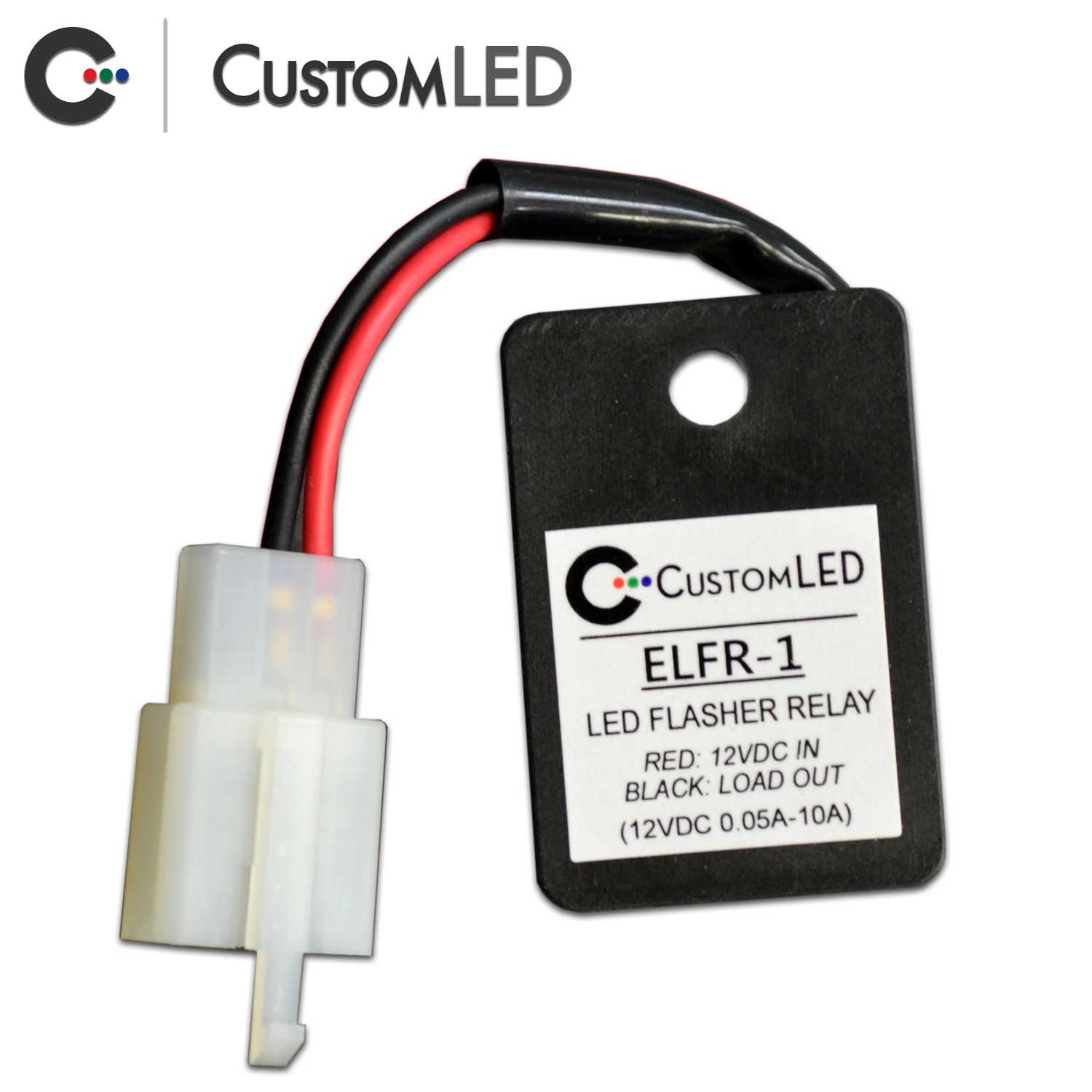
An Electronic LED Flasher Relay is the first thing to reach for when your blink speed shifts after adding blinker lamps. It holds the correct DOT blink rate no matter how much load the circuit draws, so it fixes the blink rate outright. Find the one for your bike with the flasher relay compatibility guide.
Still not sure which plug you have? Send us a clear photo of the factory connector and we will tell you which part matches. If we do not stock your exact plug, we can often build a custom pigtail for it. Contact Custom LED and we will help you pick the right one.