


Most LED turn signal install problems come down to one of six things: the blinker lamps operate as they should but blink fast, the front and rear blinker lamps stay on solid as running lights, the blinker lamps will not blink at all, one side is non-functional, all four blink together, or the blinker lamps work fine and then start flashing erratically. Almost every one has a simple cause and a specific fix. Most are wiring or load issues, not a bad part.
This guide walks through each symptom in plain terms: what it looks like, what is actually causing it, and the exact part or step that fixes it. Start by matching your problem to the list below.
The six symptoms, at a glance
Find the one that matches what your bike is doing, then jump to that section below.
- Fast blink rate. Most common, install one of our Electronic LED Flasher Relays.
- Front and rear blinker lamps stay on solid as running lights at ignition-on, and will not blink. The run circuit is back-feeding the turn circuit.
- Blinker lamps don't light up at all. Usually a blown fuse, a relay not cycling because of too little load, a bad turn signal switch or wiring, or blinker lamps wired with the wrong polarity.
- One side is non-functional. A bad blinker lamp, bad turn signal selector switch, a bad ground, or a side-specific connection.
- All four blinker lamps blink together. The 4-way blink, caused by crossover voltage at the dash indicator.
- Blinker lamps flash erratically after working fine. Water in the flasher relay body, or electrical noise.
Symptom 1: the blinker lamps blink fast when engaged.
This is the classic example of when you would install an Electronic LED Flasher Relay. The OEM Flasher Relay is designed to blink fast when it detects a burned out blinker lamp. This is to alert the rider that there is a blown bulb. It makes this determination by measuring current/power draw through the flasher relay. So, when switching to highly efficient LEDs, it's determined as a bulb-out condition by the flasher relay.
Our Electronic LED Flasher Relays are designed to blink at the correct DOT blink rate, regardless of the type of blinker lamps installed.
Symptom 2: the front and rear blinker lamps stay on solid and will not blink
If your front and rear blinker lamps come on and stay on like running lights as soon as the ignition is switched on (as well as the turn signal indicator light(s) in the gauge cluster), and they do not blink when you engage the turn signals, then the run circuit is back feeding power into the turn circuit. The turn signal circuit is getting constant power from the running-light circuit, so the flasher relay cannot possibly switch off and on the blinker lamps. The fix is to separate the run and turn functions so the turn circuit can do its job. This is usually the result of miswiring front aftermarket 2-wire blinker lamps to the motorcycle harness, in an attempt to achieve run and turn on the 2-wire blinker lamp. It also happens on some 3-wire aftermarket lamps when they are not properly designed to isolate the inputs - which can be solved by installing a diode (1N4001) inline to prevent the back feed.
With a 2-wire single-intensity lamp, if you want to keep that running-light look and still get a blink out of a single two-wire blinker lamp, the Blinker Genie is built for exactly that. It lets a single-intensity two-wire LED blinker lamp run as a steady running light and then blink on the turn pulse. It creates the blink by switching the blinker lamp off on the turn pulse, so what you see as a flash is the steady light cutting out.

Blinker Genie drives run and turn operation from a single two-wire LED blinker lamp on a motorcycle. It works on a negative common-ground system, is waterproof, and connects with butt connectors on its seven-inch wires. One thing to plan for: pulling the blinker lamp off the turn circuit reads to the flasher like a burned-out bulb, so the Blinker Genie on its own usually causes a fast blink. Pair it with an electronic flasher relay (the better fix) or a load equalizer so the rate stays normal. For the full walkthrough, see our guide to running run and turn from a single bulb.
Symptom 3: nothing blinks at all
If the blinker lamps do nothing when you hit the switch, check the fuse first. A blown turn-signal fuse is the most common cause and the easiest thing to overlook, and no relay or load fix will help until the circuit has power. Find the turn-signal or signal fuse in your bike's fuse box, pull it, and confirm the metal strip inside is intact. Replace any blown fuse with one of the same rating before going further. If a new fuse blows again right away, you have a short to track down rather than a flasher problem.
If the fuse is good and the blinker lamps still will not blink, the relay is not cycling, usually because the LED load is too low for the factory flasher to see OR you have damaged the flasher relay with the short circuit (if the fuse was blown).
If the fuse was not blown, the fix is to give the circuit a flasher relay that does not care about load, or to add load back to the circuit. An electronic LED flasher relay flashes on a fixed internal timer at the normal DOT blink rate of 60 to 120 flashes per minute no matter how little current your LEDs draw, so it solves the no-blink and fast-blink problems outright.
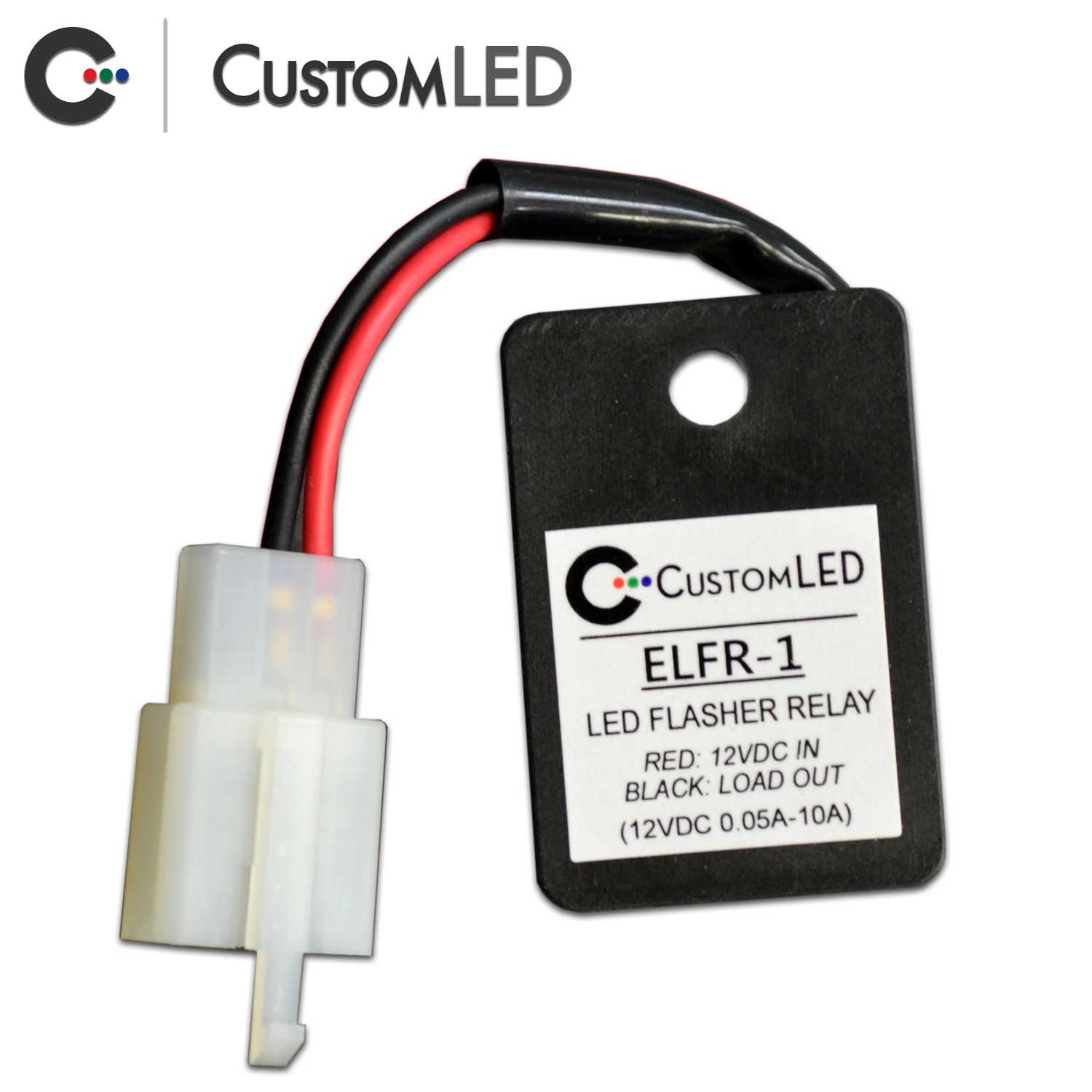
ELFR-1 is the standard plug-and-play relay and the one most riders need. It holds the normal blink rate across a wide load range of 0.05A to 10A (about 0.6 to 120 watts), so a low-draw LED setup that will not trigger the stock flasher blinks normally on it. It plugs into compatible two-wire and three-wire OEM flasher relay connectors. On three-wire sockets, the third wire is a ground the ELFR-1 does not need. For a hard-wire install, the red wire goes to switched +12V and the black wire goes to the load (the blinker circuit); leave the factory ground wire unconnected. One note: swapping the relay can drop a factory self-canceling feature if your bike has one, in which case 25 Watt Load Equalizers are the better way to keep self-cancel.
The other fix is to add electrical load so the factory flasher detects enough current to start cycling. A load equalizer is a resistor that mimics the power draw of the original bulb. This is the right path when no plug-in relay fits your bike, or when you need to keep a factory self-canceling feature that a relay swap would disable.

25 Watt Load Equalizer provides load equal to a 20 to 30 watt incandescent, so the OEM flasher behaves as if the stock bulbs are still there and the blink returns to normal. It fixes the fast-blink, no-blink and 4-way blink problems, installs with quick-tap connectors and no cutting, and uses one per replaced stock bulb (one per side). Because it leaves the factory flasher in place, it keeps a self-canceling feature that swapping the relay would lose.
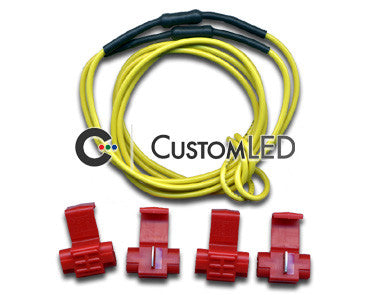
2 Watt Load Equalizer is usually enough to correct the blink speed on motorcycles that come equipped with LED blinker lamps from the factory.
See our guide to LED Load Equalizers for how to size them for your application.
Two other things can leave the blinker lamps completely dark. A failed turn-signal switch can stop the circuit from ever sending power to the blinker lamps, so if the fuse is good and a known-good relay still produces nothing, test or bypass the switch. And because LEDs are polarity-sensitive in a way incandescent bulbs are not, a blinker lamp wired with its positive and negative leads reversed simply will not light. If only the LEDs you just installed are dark, reverse the two wires on that blinker lamp and check again.
Symptom 4: one side is non-functional
A flasher relay affects both sides equally, so if only one side has stopped working, the cause is on that side, not the relay. Work through four things in order. First, check the blinker lamp itself: confirm the blinker lamp or integrated tail light on the non-functional side actually lights up, and try a known-good unit if you have one. Second, isolate the part by swapping it side to side. If you move the suspect module or bulb to the working side and the problem moves with it, the part is the issue; if the problem stays on the same side of the bike, the wiring or connection on that side is the issue. Third, check the ground on the non-functional side, since a poor or missing ground is one of the most common reasons a single blinker lamp goes dark. A clean, tight ground connection fixes more one-side problems than anything else. Fourth, check the turn-signal selector switch: a worn contact on one side of the switch can feed only that side, so if the blinker lamp, ground, and wiring on the non-functional side all check out, the switch is the next suspect.
Symptom 5: all four blinker lamps blink together
When every blinker lamp flashes at once like a hazard light no matter which way you signal, that is the 4-way blink problem, and a flasher relay cannot cause or cure it. It happens because LEDs draw so little current that the small current that feeds through the dashboard turn signal indicator lamp is enough to illuminate the opposite side circuit. The proper fix is to diode-isolate the indicator circuits so current can no longer cross from one side to the other.
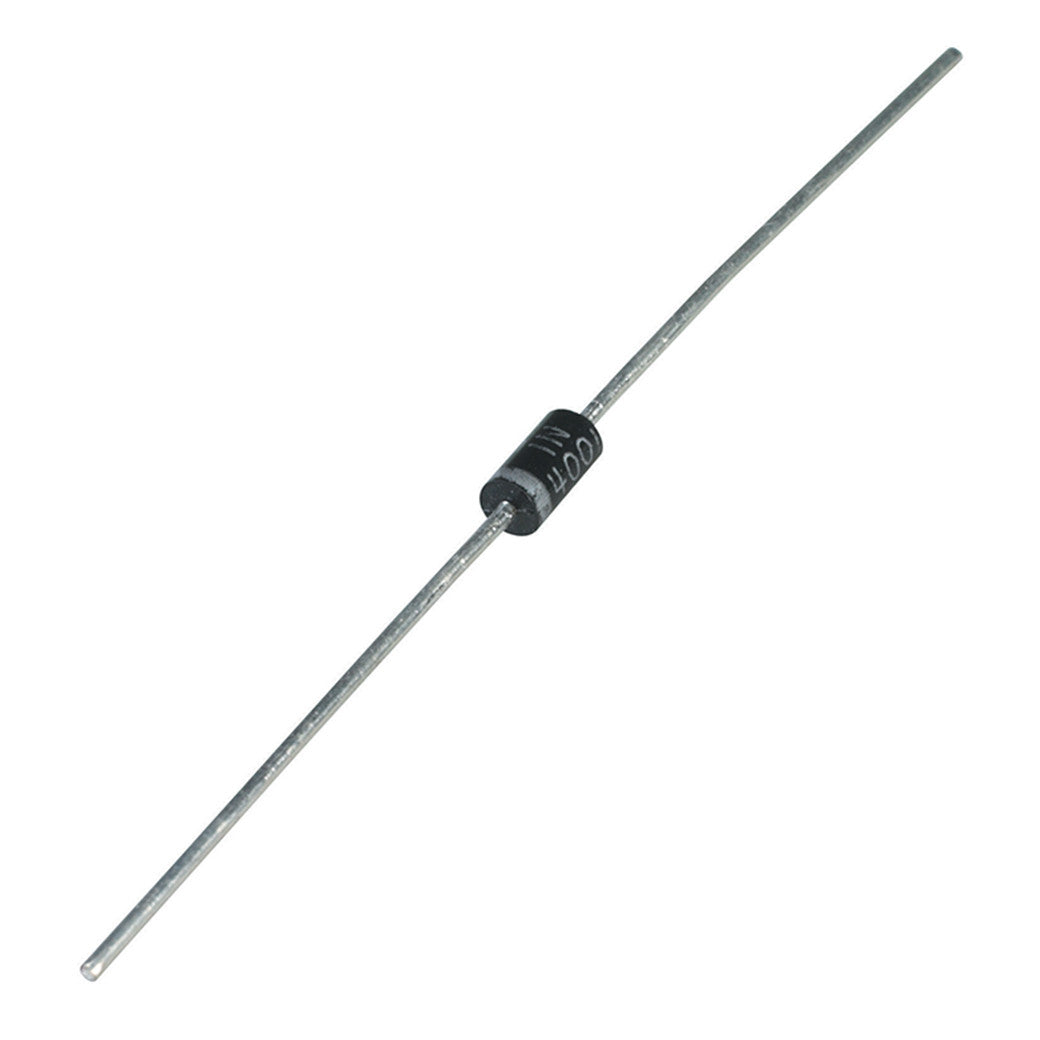
Diode for 4-Way Blink Fix is the diode-isolation part for this exact problem. It blocks the back-feed at the indicator so the left and right circuits stay separate and each side blinks on its own again. Adding load equalizers also resolves the 4-way blink on many bikes. For the complete walkthrough of why this happens and how to wire the fix, read our 4-way blink guide.
Symptom 6: the blinker lamps flash erratically after working fine
If everything worked at install and the blinker lamps later start flashing erratically or intermittently, two field causes account for most of it, and neither is a bad relay.
The first is water. Moisture can wick down the inside of a wire sheath and reach the connector or relay, which throws off the signal. Dry the wiring out, and route the open end of any wire tube or sheath downward so water drains away instead of collecting at the connection.
The second is electrical noise. If the relay sits close to a source of ignition noise, that interference can make the blinker lamps flash unevenly. Move the relay an inch or two away from the noisy spot and strap it down so it stays put. A small relocation is often enough to settle an erratic flash. Both are things we see in the field, so confirm the behavior on your own bike before drawing conclusions.
How to work through any LED turn signal problem
When a symptom does not obviously match the list, work in this order and you will land on the cause without guessing.
- Check the fuse. A blown turn-signal fuse mimics a dead relay. Confirm power before anything else.
- Check the grounds. A bad ground causes one-side failures, erratic behavior and blinker lamps that won't light. Make every ground clean and tight.
- Isolate the side. Swap the suspect part side to side. If the fault follows the part, the part is the issue; if it stays put, the wiring on that side is.
- Match the load. If the blinker lamps blink too fast or not at all, fit an electronic flasher relay or match the removed bulb wattage with a load equalizer.
- Separate the circuits. Solid fronts mean run and turn are tied together; all-four-blink means the indicator is back-feeding. Separate them, or diode-isolate the indicator.
For the no-blink and fast-blink symptoms, the fastest fix is to find a relay that fits your bike and plug it in.
Still not sure?
If you have worked through the list and the problem is still there, or you are not sure which symptom you have, send us a message with your make, model and year, a description of what the blinker lamps are doing, and a photo of your wiring or OEM connector. We will point you to the right fix.